
You may need help improving your smile—veneers or crowns. Both options offer advantages, and it can be challenging to determine which is right for you. This article sheds light on the critical differences between veneers and crowns, helping you make an informed decision and achieve the perfect smile you’ve always wanted.

Definition of Veneers and Crowns
Veneers
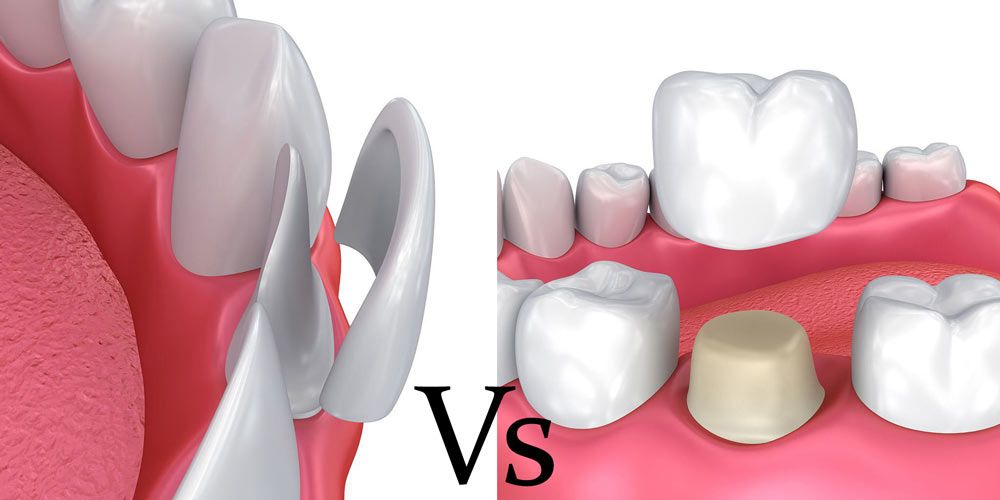
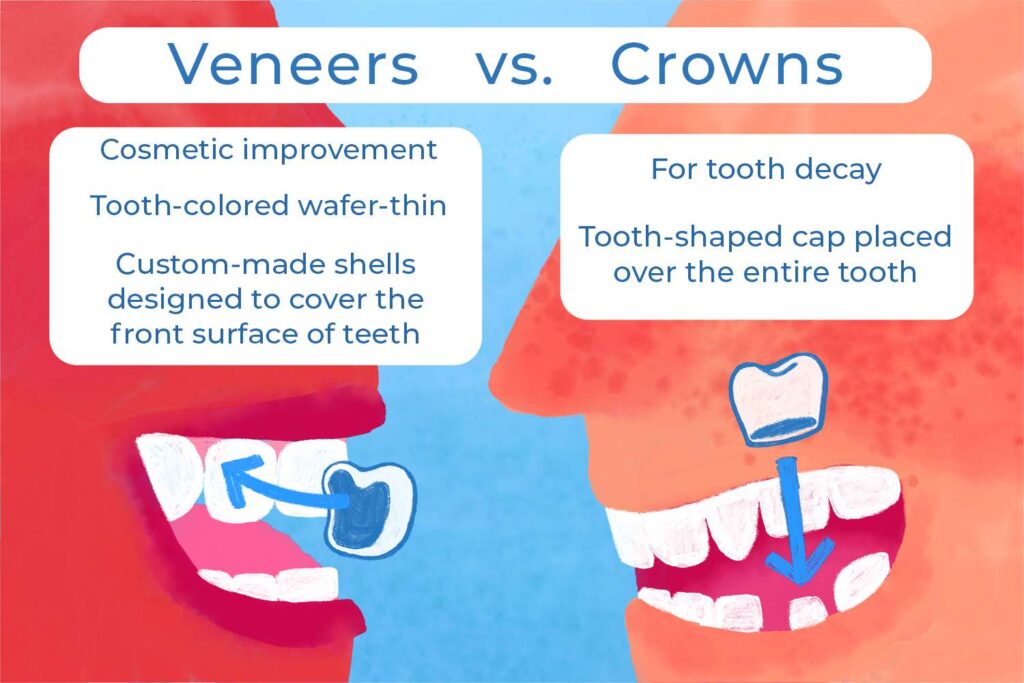
Veneers are thin shells made of porcelain or composite resin custom-made to fit on the front surface of your teeth. They are designed to improve the appearance of your teeth by covering imperfections such as stains, chips, or gaps. Veneers can give you a brighter, straighter, and more uniform smile.
Crowns
Crowns, or dental caps, are restorations that completely cover a damaged tooth or implant. They are usually made of porcelain, porcelain fused to metal, or metal alloys. Crowns protect and strengthen weak or damaged teeth and can be used for cosmetic purposes. They are custom-made to match your natural teeth’ shape, color, and size, providing a seamless look.
Material Used
Veneers
Veneers can be made from two primary materials – porcelain or composite resin. Porcelain veneers are known for their durability and natural appearance. They are stain-resistant and can mimic the translucency of natural teeth. Composite resin veneers, on the other hand, are less expensive and can be applied directly to your teeth in a single visit. However, they are more prone to staining and may not last as long as porcelain veneers.
Crowns
Crowns are typically made from porcelain, porcelain fused to metal, or metal alloys. Porcelain crowns are highly aesthetic and can closely match the color and texture of your natural teeth. Porcelain fused to metal crowns offer a great combination of strength and natural appearance, as the metal base provides durability while the porcelain overlay offers a more natural look. Metal alloy crowns, such as gold or silver, are less popular due to their distinct color but may be preferred for their strength and longevity.

Durability
Veneers
Porcelain veneers are known for their durability and can often last up to 10-15 years with proper care. However, they can still chip or crack if subjected to excessive force or if you have habits such as teeth grinding. Composite resin veneers may not last as long as porcelain veneers, usually around 5-7 years, before they may need replacement or repair.
Crowns
The durability of crowns depends on the material used. Porcelain crowns are generally long-lasting and can withstand normal biting and chewing forces. However, they may be more prone to chipping or fracturing if subjected to excessive force, such as biting on complex objects. Porcelain fused to metal crowns and metal alloy crowns are known for their strength and durability and can last 10-15 years or even longer.
Suitability for Different Dental Issues
Veneers
Veneers are a suitable option for addressing a variety of dental issues, including:
- Discolored or stained teeth: Veneers can cover up intrinsic stains that do not respond well to teeth whitening treatments.
- Chipped or cracked teeth: Veneers can restore the appearance and strength of damaged teeth.
- Gaps between teeth: Veneers can close small gaps and create a more even and harmonious smile.
- Misaligned or slightly crooked teeth: Veneers can give the illusion of straighter teeth without needing orthodontic treatment.
Crowns
Crowns are more commonly used for the following dental issues:
- Severely damaged or decayed teeth: Crowns can provide protection and support to teeth with extensive damage or decay.
- Root canal-treated teeth: Crowns are often placed on teeth that have undergone root canal treatment to reinforce their structure.
- Large fillings: Crowns can replace large fillings, providing better stability and strength.
- Malformed or misshapen teeth: Crowns can reshape and improve the appearance of teeth with abnormal shapes.

Procedure
Veneers
The process of getting veneers typically involves several steps:
- Consultation: You will discuss your goals and expectations with your dentist. They will evaluate your oral health and determine whether veneers suit you.
- Preparation: A thin layer of enamel will be removed from the front surface of your teeth to create space for the veneers.
- Impression: Your dentist will take impressions of your teeth, which will be used to fabricate your custom veneers.
- Temporary veneers: Temporary veneers may be placed while your permanent veneers are being crafted in a dental lab.
- Bonding: Once your permanent veneers are ready, they will be bonded to your teeth using dental cement, and any necessary adjustments will be made for a perfect fit.
Crowns
Getting a dental crown typically involves the following steps:
- Consultation and preparation: Your dentist will examine your teeth and determine if a crown is needed. If so, they will prepare the tooth by removing any decay or damage and reshaping it to accommodate the crown.
- Impressions: An impression of your teeth will be made to create a custom crown that will fit precisely.
- Temporary crown: While your permanent crown is being fabricated, a temporary crown will be placed to protect your tooth.
- Crown placement: Once your permanent crown is ready, it will be cemented onto your prepared tooth, and any necessary adjustments will be made to ensure a comfortable and proper fit.
Cost
Veneers
The cost of veneers varies depending on several factors, including the material used, the number of veneers needed, and the location of the dental practice. Generally, porcelain veneers are more expensive compared to composite resin veneers. The price per veneer can range from $800 to $2,500.
Crowns
The cost of dental crowns also depends on factors such as the material, the case’s complexity, and the dental practice’s location. Porcelain crowns are usually more expensive than metal-based crowns. The cost per crown can range from $800 to $2,500.
Appearance
Veneers
Veneers are highly versatile and can give you a beautiful and natural-looking smile. The veneers’ shade, shape, and size can be customized to match your existing teeth or achieve the desired aesthetic result. They can effectively mask imperfections, giving you a more symmetrical and aesthetically pleasing smile.
Crowns
Crowns can also provide a natural appearance, as they are custom-made to blend seamlessly with your natural teeth. The color and shape of the crown can be matched to your existing teeth, resulting in a natural and uniform smile. However, due to the material used, such as porcelain fused to metal crowns, there may be a slight variation in color compared to natural teeth.
Maintenance and Longevity
Veneers
Maintaining veneers is relatively simple and requires good oral hygiene practices. Here are some tips for caring for your veneers:
- Brush and floss regularly: Maintain a good oral hygiene routine to prevent plaque buildup, cavities, and gum disease.
- Avoid excessive force: Avoid biting on complex objects or using your teeth as tools to prevent chipping or cracking.
- Regular dental check-ups: Visit your dentist regularly for cleanings and check-ups to ensure the health and longevity of your veneers.
- Stain-causing substances: Minimize consumption of stain-causing substances such as coffee, tea, and tobacco to prevent discoloration.
With proper care, veneers can last 10-15 years or even longer.
Crowns
Caring for dental crowns is similar to caring for your natural teeth. Here are some maintenance tips for your crowns:
- Maintain oral hygiene: Brush and floss regularly to keep your teeth and gums healthy.
- Avoid grinding or clenching: If you grind your teeth frequently, wearing a nightguard can protect your crowns from excessive force.
- Regular dental visits: Visit your dentist for check-ups and professional cleanings to ensure the longevity of your crowns.
- Maintaining a balanced diet: Avoid excessive consumption of sugary foods and beverages to prevent tooth decay and damage.
With proper care, crowns can last 10-15 years or longer.
Potential Risks and Complications
Veneers
While veneers are considered safe, there are a few potential risks and complications to be aware of:
- Sensitivity: Some individuals may experience increased tooth sensitivity to hot or cold temperatures after getting veneers. This is usually temporary and subsides over time.
- Decay: Veneers do not protect against tooth decay, so it is essential to maintain good oral hygiene to prevent cavities.
- Irreversible process: Applying veneers involves removing a thin layer of enamel, a permanent alteration to your teeth.
- Chipping or damage: Veneers can chip or crack if exposed to excessive force or trauma.
Crowns
Crowns also have a few potential risks and complications, including:
- Allergic reactions: Some individuals may be allergic to crown materials like metals or dental cement. This is rare but can occur.
- Tooth sensitivity: Like veneers, crowns can cause temporary tooth sensitivity after placement, which typically resolves with time.
- Decay at the margins: If the crown is not fitted correctly or has a gap between the crown and the tooth, bacteria can accumulate and cause decay.
- Fracture or dislodgment: Although rare, crowns can fracture or become dislodged if subjected to excessive force or trauma.
Decision-making Factors
Considerations
When deciding between veneers and crowns, consider the following factors:
- Severity of the dental issue: Veneers are more suitable for minor cosmetic enhancements, while crowns are often recommended for more significant structural damage or decay.
- Material preference: Porcelain veneers and crowns provide a more natural appearance, while composite resin veneers are more affordable but may have a less lifelike appearance.
- Budget: Veneers and crowns vary in cost, so consider your budget and insurance coverage.
- Longevity: Veneers and crowns have different lifespans, so factor in the expected lifespan and the potential need for future replacement or repairs.
- Consultation with your dentist: Your dentist will evaluate your dental needs and recommend the most suitable option based on your oral health and desired outcome.
Consultation with a Dentist
It is crucial to consult with a qualified dentist to decide about veneers or crowns. They will assess your dental situation, discuss your goals, and recommend the most appropriate treatment option. Dentists have the expertise to evaluate your oral health, consider the pros and cons of each treatment, and guide you toward achieving a healthy and beautiful smile. Take the opportunity to discuss any concerns or questions you may have during your consultation, as open communication with your dentist is vital in making the best decision for your dental needs.
Content 10/10


